Editor score 4.2 / 5

If you're wondering whether this Stussy black camo tee is worth ordering, the key isn't just looking at "pure cotton" or the camo pattern—it's judging three things separately: whether the page specs are clear, whether the fit suits your styling needs, and whether the length and fabric feedback are enough to support a purchase.
What the Page Specs Confirm
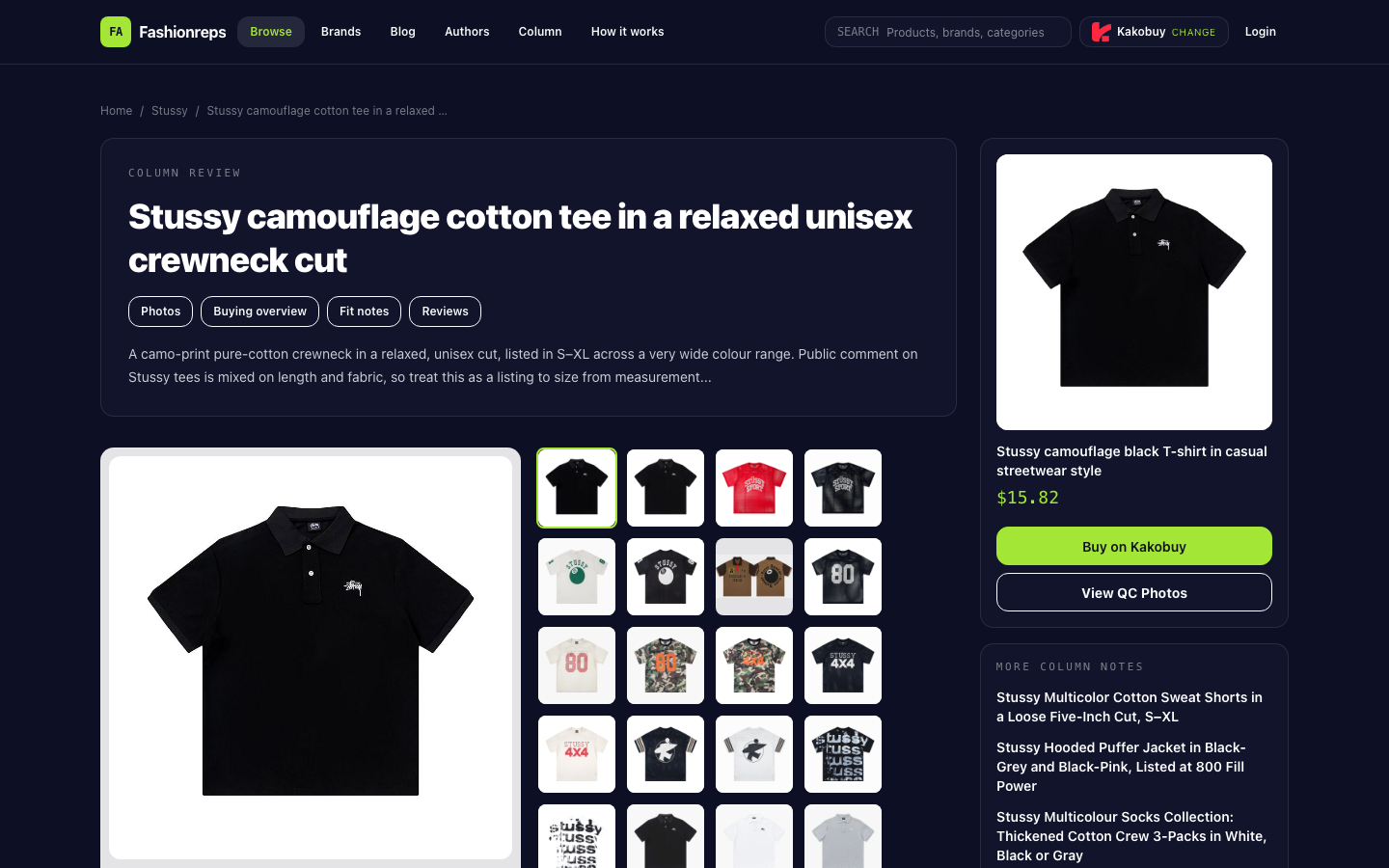
The product page lists this tee as a pure cotton crewneck short-sleeve, with a spec weight of 180–250gsm, a relaxed unisex fit, sizes S–XL, and multiple camo and color options. The page also claims wrinkle-resistant finishing and antibacterial properties, categorizing it as all-season casual wear.
This info helps gauge its general positioning: 180–250gsm falls into a medium weight range, usually with more presence than thinner summer basics, but the page gives a range rather than the actual measured weight of this specific item. So you can't conclude from that number alone that it's definitely thick, structured, or durable.
The page lists a reference price of $15.82, but the final item price, service fees, and international shipping depend on the shopping agent's checkout page. This reference price can't be taken as the final cost, nor can it be used to infer stock or current availability.
Fabric Evidence: Specs Are Clear, but Quality Conclusions Are Limited
What can be directly confirmed right now is the catalog info, not independent buyer reviews for this specific SKU. The page states pure cotton and 180–250gsm, but doesn't provide shrinkage rates, pilling, color fading, or long-term durability tests for this particular item after multiple washes.
Public community discussions about Stussy tees are mixed. Some long-time consumers believe the brand's clothing quality is generally good, while others criticize the fabric of certain tees. Since these opinions aren't all about this black camo SKU, you can't treat general brand talk as proof of this product's quality.
So fabric judgment can be broken into three layers:
- Confirmed: The page labels it pure cotton, with a weight range of 180–250gsm.
- Reasonable inference: It's closer to a medium-weight everyday tee, not an ultra-thin fitted one.
- Not confirmed: Actual hand feel, post-wash changes, seam durability, and whether different color batches are identical.
Fit and Length: The Main Purchase Risk Is the Size Chart
The page describes the fit as relaxed unisex, and notes a 1–2 cm variance in catalog measurements. In general Stussy tee discussions, some suggest buying your normal size for a relaxed fit, while others report that some newer releases run short, close to a cropped silhouette.
These two types of info don't contradict each other, because "relaxed" mainly concerns chest width and overall room, while a shorter length changes visual proportions. Even if the chest is roomy, a short length might not work for those wanting to cover the hips or layer.
| Styling Need | Key Measurement | Advice |
|---|---|---|
| Everyday casual, prefer relaxed silhouette | Flat chest width, shoulder width | First check if chest width matches your usual tee, then decide if you should buy your normal size |
| Fall/winter inner layer or layering | Length, sleeve length, hem position | Don't just look at chest; a short length can ruin layering with hoodies or jackets |
| Need stable coverage and fixed proportions | Length, front/back length difference | If you can't accept a short length, "relaxed unisex" description alone isn't enough to order |
Pre-Order Verification Steps
Step one: Find the size chart for the specific color and size you plan to buy. The page lists S–XL, but that doesn't mean every size will fit you. Prioritize recording flat chest width, length, shoulder width, and sleeve length, then compare with a tee you already own and like, measured flat.
Step two: Factor in the 1–2 cm variance. If your ideal length is only 1 cm above your minimum, that margin isn't enough to offset measurement error. For those particular about length, it's better to choose a size with more leeway or first ask the shopping agent for actual batch measurements.
Step three: Check QC photos. Focus on whether the collar lies flat, whether the camo print is obviously misaligned, whether shoulder seams are symmetrical, whether cuffs and hem are wavy, whether stitching has skipped stitches, and whether the body has noticeable color differences. QC photos help spot appearance issues but can't prove long-term fabric stability.
Step four: Confirm washing risks. Pure cotton garments may change size after washing, but the current page provides no shrinkage test data for this SKU. If the length is already close to your minimum acceptable, don't assume "pure cotton" means post-wash size is controllable.
Who Might Consider Buying
If you want an everyday casual, relaxed unisex, pure cotton crewneck short-sleeve with a black camo pattern, and you're willing to buy based on measurements for the specific color and size, this item can be on your shortlist. The 180–250gsm label also makes it seem not ultra-thin, appealing to those who want some fabric presence.
But this judgment is based on the premise of "check measurements first, then QC," not on a wealth of independent buyer feedback for this SKU. The page doesn't provide enough evidence to confirm actual hand feel, post-wash shrinkage, or long-term durability.
When to Hold Off
If you need stable length, want clear hip coverage, or can't accept variations between batches, current evidence is insufficient for a direct purchase. Especially if you've had issues with Stussy tees running short before, you should first get specific color length and chest width data.
Likewise, if you see "pure cotton" and "180–250gsm" as a quality guarantee, hold off. They only describe catalog specs, not a substitute for wash tests or independent usage feedback on this item.
Overall, this Stussy black camo tee is better suited to buyers who have clear size references, accept QC verification first, and can tolerate uncertainty about long-term fabric performance. Before purchasing, at least confirm the specific color's flat chest width and length; if the seller or shopping agent can't provide sufficient size data, holding off is safer than risking it based on a relaxed fit description alone.