Editor score 4.2 / 5

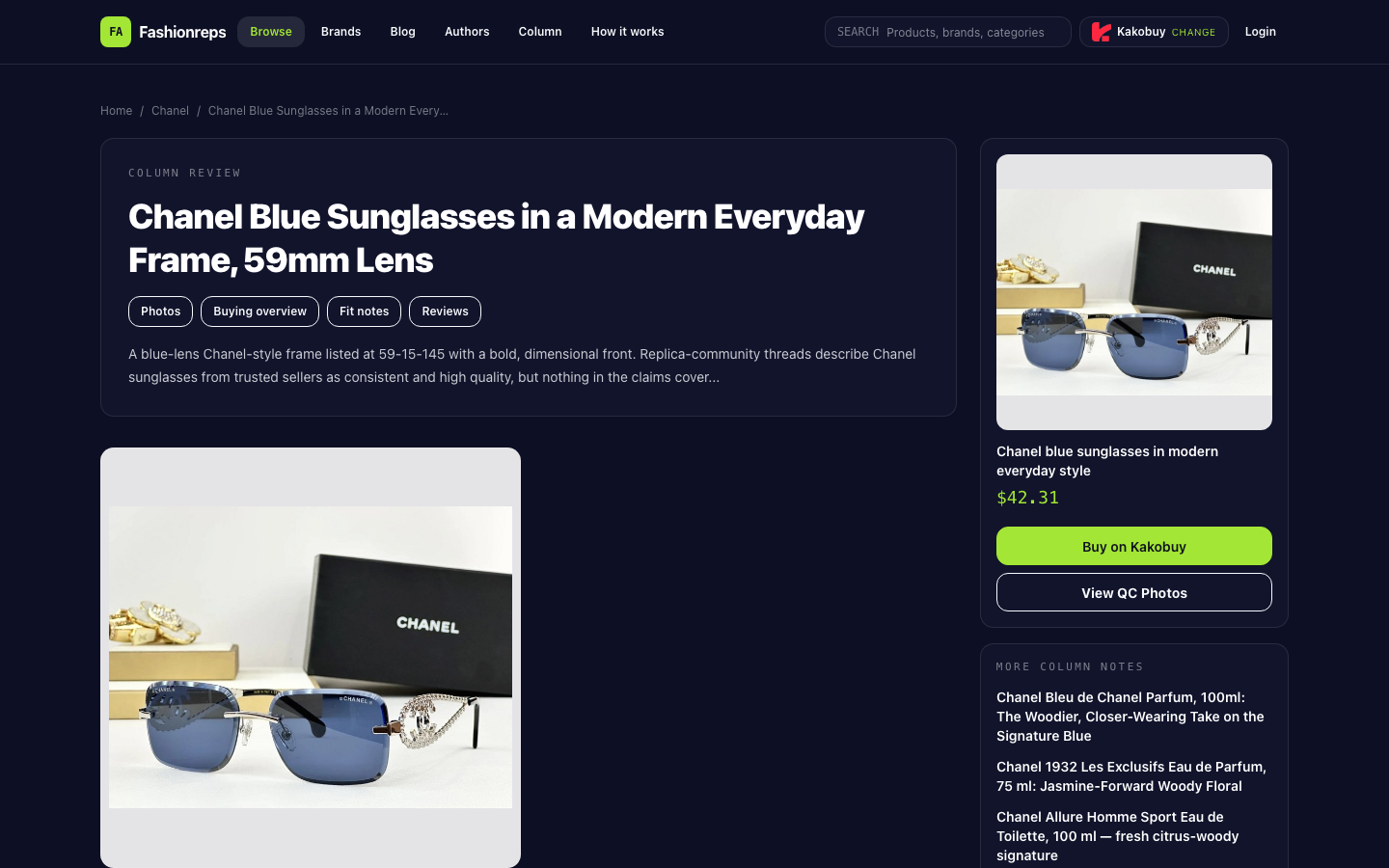
If you are considering these blue-lens sunglasses, the 59-15-145 listed on the page is a size combination you can use for an initial check, but it cannot prove by itself that a certain face shape will fit. A safer approach is to first measure a pair of old glasses that you wear without pinching or slipping, then compare that data with this size combination and your fitting experience.
What 59-15-145 Means
The page lists this frame as 59-15-145, which can usually be understood as follows:
| Number | Corresponding Part | Key Check |
|---|---|---|
| 59 | Single lens width in millimeters | Whether the lens looks too narrow or too wide |
| 15 | Bridge width in millimeters | Whether the frame tends to pinch the nose or slip |
| 145 | Temple length in millimeters | Whether the temples fit naturally around the ears |
These numbers mainly describe key dimensions of the frame, and do not provide complete overall frame width, lens height, or face shape fit conclusions. Therefore, you cannot directly judge from 59-15-145 alone whether it suits a round face, square face, or long face.
Measure a Well-Fitting Old Pair of Glasses First
Choose a pair of glasses that you wear for long periods without noticeable pinching or slipping. Place it on a flat surface, use a millimeter ruler to measure the lens, bridge, and temple, and note the fit.
Record the following:
- Single lens width, focusing on whether it is close to 59 mm.
- Bridge width, focusing on whether it is close to 15 mm.
- Temple length, focusing on whether 145 mm meets the wearing needs of your current glasses.
- Whether the frame front extends too far beyond your face, especially at the cheekbones and temples.
- After wearing for ten to fifteen minutes, whether there are obvious marks on the nose bridge or temple pressure.
- When lowering your head, turning, or talking, whether the frame keeps sliding down.
When measuring, do not look at only one number. For example, similar lens width does not mean the bridge position or overall frame width is suitable; suitable temple length does not guarantee the frame won't pinch your temples.
Assess Fit Based on Your Old Glasses
You can classify your old glasses into three situations:
- Old glasses dimensions are close to 59-15-145, and they are stable during long wear. In this case, this blue frame has at least a reliable starting point for size, but you should still check specific frame photos.
- Old glasses lens width is significantly smaller than 59 mm, and they already feel loose. The new glasses may have a more prominent horizontal presence, so you can't order just because the temple length is the same.
- Old glasses dimensions are close, but they pinch the nose, squeeze the ears, or slip easily. Do not treat similar numbers as proof of fit, because issues may stem from nose pad position, frame curvature, or frontal width.
The page material also mentions that bolder Chanel styles may have differences in fit, and some buyers feel that fit for such frames is hard to predict. Therefore, 59-15-145 is more suitable as a comparison baseline than a guarantee.
Face Shape Is Only a Secondary Consideration
If your face is wider horizontally, 59 mm single lens width may create a more noticeable coverage, but whether it fits still depends on overall frame width and frame shape. If your face is narrower, lens width and temple outward angle are more important to confirm.
Round face, square face, or long face cannot replace actual measurements. Frames with the same size may have completely different wearing effects due to different front contours, nose pad positions, and temple angles. Especially for the bold frames mentioned on the page, fit should not be determined solely by product name or face shape classification.
What Else to Confirm Before Ordering
Current information does not confirm the frame material, logo workmanship, or final wearing effect of this specific style, nor does it cover exclusive QC conclusions. The page provides details such as 59-15-145 size, blue lenses, and a wider presence; other judgments should be based on new product photos.
Before ordering, you can ask the shopping agent for or check:
- Full frontal photos of the frame to confirm actual horizontal width and left-right symmetry.
- Close-up photos of the bridge and nose pads to assess potential nose pressure or excessive gaps.
- Clear photos of the logo or lettering to check for intact edges or obvious blur.
- QC images of temples, hinges, and hardware to check for visible scratches, deformation, or assembly issues.
- Photos of actual labels or measurements to verify whether it is still 59-15-145.
The reference price shown in the material is $42.31, but the final product price, service fee, and international shipping need to be confirmed on the shopping agent website; do not estimate total cost based solely on the reference price.
Conclusion
The most reliable sequence to judge whether these sunglasses fit you is: first measure a pair of old glasses that fit stably, then compare with 59-15-145, then confirm overall frame width, nose pad position, and specific QC photos. If your old glasses are close in size and perform well, this data can serve as a starting point for further checking; if you need a certain fit without inspection, current evidence is insufficient to guarantee it.