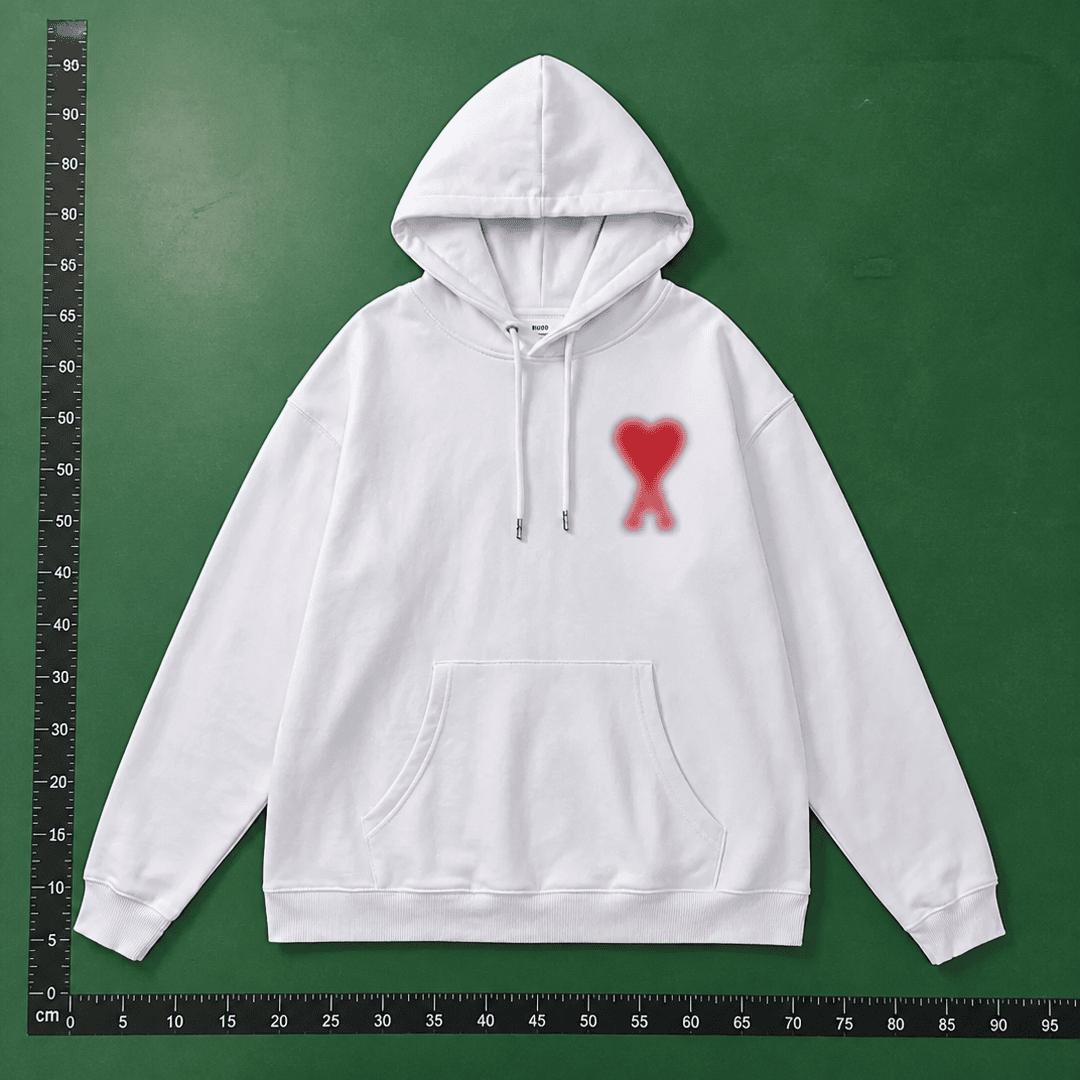
Editor score 4.2 / 5
Defining the Purchase Task and Evidence Boundaries for Ami Paris F/W Hoodie QC Verification
This guide is for people who have already considered buying the Ami Paris Multicolor Hoodie Collection but aren't sure whether the QC photos are enough to justify placing an order. The goal isn't to authenticate or guarantee quality from a single image, but to help you complete three actions: confirm which product, size, and color the photos correspond to; record the details that are actually visible in the images; and identify items that require additional photos or warrant pausing the purchase.
This article discusses the Ami Paris Multicolor Hoodie Collection on fashion-reps, described on the page as an oversized, unisex hoodie available in multiple colors and sizes from S to XXXL. The page information was last marked as updated on September 26, 2026; price, stock, available sizes, and link status should still be re-verified before ordering. 📌
Photos can help you check embroidery, prints, stitching, cuffs, hem, and overall proportions, but they cannot alone prove fabric feel, warmth, post-wash performance, actual weight, or long-term durability. If the photos can't confirm a key item, keep it as "unconfirmed" rather than writing it off as a pass.
Confirm Style, Color, Size, and Current Link from the Product Details Page
Start by opening the actual product details page — don't judge from the homepage, brand page, category page, or another product's photos. The page title should match the Ami Paris Multicolor Hoodie Collection, and you should see the product name, style information, size or color options, and other supporting details.
Once on the details page, first record the following information:
- Product name and current page URL
- Selected color, such as black/black, black/red, red, gray, off-white, pink, or dark green
- Selected size, along with any chest, shoulder, body length, or sleeve length measurements provided
- Current price, stock status, and purchase entry point displayed on the page
- Whether the page still loads normally, without redirects, blank screens, or errors
The page data indicates that this hoodie's main fabric is listed as cotton, with additional details like hood, long sleeves, oversized fit, patch pockets, and embroidered designs. "Cotton" and "embroidery" here are claims from the product page, not proof from QC photos about fabric composition or craftsmanship durability.
In terms of sizing, the page suggests that men typically choose their usual size, while women often consider one size down; it also describes the fit as oversized and boxy, with potential extra width under the arms and a body length that may not suit those needing a cropped proportion. This advice is only a preliminary filter—ultimately, compare the page's actual measurements with your own garment sizes. 🧵
Access the Corresponding Product's Real QC Gallery via View QC Photos
After confirming the product details page, find the entry labeled View QC Photos on that page, and from there, enter the QC photo collection for that specific product. Don't guess the QC address based on the product name, and don't treat similar-looking models from search results as evidence for the current product.
Once in the gallery, first verify that the photos are still labeled or associated with the same product. At minimum, check:
- Is the item in the photos a hoodie, not a crewneck, sweater, or other Ami Paris item?
- Does the color match the current selection on the details page?
- Can you see the chest design, hood, cuffs, and hem consistent with the current product?
- Are the photos from the same item, or mixed with different colors, sizes, or batches?
- Are the photos clear enough to support the specific judgments you need to make?
If the QC gallery only shows distant shots, or key areas are blocked, reflective, folded, or cropped, record it as insufficient evidence. Multiple photos from the same angle don't mean the inspection coverage is complete. ✅
Verify Embroidery or Print Position, Edge Definition, and Symmetry
The Ami chest design is one of the most critical areas to check on this hoodie. Look first at the design's position on the body, then the edges and stitching, not just whether the color looks close.
Suggested inspection order:
- Is the design positioned in the chest area as shown on the product page, with no obvious left-right height offset?
- Are the letters or heart outline clearly distinguishable, with no large areas of fraying, white fuzz, or stitch buildup along the edges?
- Does the embroidery fill show obvious gaps, broken threads, flattening, or local bumps?
- Is the base fabric around the design pulled or wrinkled, and do the stitches cause noticeable distortion?
- Across the same set of QC photos, do front, angled, and close-up images show a consistent shape?
Public information notes that photo verification for the Ami heart design typically focuses on whether the letter outlines are crisp and the stitching is neat. However, such observations only describe visible appearance clues in the images; they cannot lead to authenticity conclusions or guarantee that the received item will match the photos exactly.
If the design position looks low, skewed, or the edge details are indiscernible, request additional flat-lay close-up photos of the front, and ask the photographer to include the full body of the garment so you can judge the local position rather than just cropped details. 🔍
Check Visible Details: Collar, Cuffs, Hem, and Stitching
Edge areas of a hoodie are often overlooked in flat-lay photos, but they directly affect size judgment and how the garment will wear. When checking, separate visible evidence from personal judgment.
| Inspection Area | What Can Be Confirmed in Photos | What Needs Supplement or Cannot Be Confirmed by Photos Alone |
|---|---|---|
| Collar and hood opening | Obvious deformation, skipped stitches, loose threads, or uneven edges | Elasticity, thickness, post-wash looseness |
| Cuffs | Ribbing similar width left and right, obvious broken threads or wrinkles | Tightness, recovery, actual cuff circumference |
| Hem | Evenness, obvious skipped stitches or wavy stitching | Rolling after wear, suitability for target height |
| Shoulder seams and side seams | Obvious misalignment, twisting, or bunching | Actual shoulder width, ease, and wearing comfort |
Seeing a loose thread doesn't necessarily mean the entire garment has a serious issue; likewise, not seeing loose threads in the photos doesn't prove there are none elsewhere. A safer approach is to note the specific location of the thread, whether its length is visible, whether it affects the design or structure, and request closer photos for confirmation.
If cuffs, hem, or side seams are folded or covered, don't write "no problem found" as "no problem." The correct record is "this area cannot be fully confirmed from the current angles."
Compare Product Page Information with QC Photos for Color, Size, and Consistency
The value of QC photos depends on whether they correspond to the exact option you plan to purchase. Black, dark green, gray, or off-white colors that look similar can appear quite different under various lighting conditions, so you cannot judge from screen color alone whether the wrong item was sent.
Create a brief comparison record:
- Details page selection: color, size
- QC photos show: color, size label or identifiable features
- Photo status: front, back, close-up, size tag, packaging, or other angles
- Confirmed items: embroidery position, cuffs, hem, stitching, etc.
- Unconfirmed items: actual measurements, fabric feel, weight, odor, post-wash performance
- Next step: accept, request more photos, ask questions, or pause
If the details page shows a certain color, but the QC photos only show an unidentifiable dark garment, request additional photos with color identification or more stable lighting. If the photos include a size label, treat it only as a size clue; ultimately compare actual measured chest, shoulder, body length, and sleeve length with the page's size chart.
This hoodie is described as oversized and boxy, and the page data also hints that different people may need different sizing directions. For those who are shorter, prefer a fitted look, or don't want excessive width under the arms, confirming the label size isn't enough—prioritize requesting flat-lay measurement photos. 📏
Distinguish Visible Evidence, Editorial Judgment, and Unconfirmable Items
A reusable judgment method is to divide conclusions into three layers:
Layer one is directly visible evidence from the photos, such as "in the front photo, the chest design is located on the left chest area," "a loose thread is visible on the cuff edge," or "the size label is clearly readable in the current photo." Such statements should be specific and not include reasons not shown in the photo.
Layer two is editorial judgment based on evidence, such as "existing photos are sufficient to continue checking position, but not to judge embroidery durability." This is not a quality guarantee, just a description of the evidence scope.
Layer three is currently unconfirmable items, such as material composition, weight, warmth, post-wash shrinkage, actual fit, odor, and long-term pilling. These require explicit data from the product page, actual measurements, or post-receipt inspection, and cannot be inferred from ordinary QC photos.
Do not use conclusions like "authentic," "genuine," "quality guaranteed," or "absolutely flawless." Photos at most help reduce some visible risks; they cannot replace platform after-sales policies, return windows, or post-delivery inspection. If after-sales policies, return conditions, or actual shipping status have not been re-confirmed on the current purchase platform, don't treat them as established facts.
Use a Checklist for Additional Photos, Questions, or Pausing the Order to Determine Next Steps
If you're ready to proceed with the purchase, request additional photos in this order:
- Full flat-lay front photo, ensuring the chest design and body proportions are visible together
- Close-up of the chest embroidery in natural or stable lighting, avoiding reflections and over-compression
- Close-up photos of left and right cuffs, hem, and collar
- Size tag and full garment flat-lay measurement photos
- Clear identification of your selected color and size, to avoid using photos of other options
If after additional photos you still cannot confirm key issues, you may pause the order. Especially avoid proceeding based solely on existing photos in these situations:
- QC photos cannot be matched to the color or style on the product details page
- Embroidery or print is cropped, obscured, or severely blurred
- Size label cannot be matched with actual measurement data
- You need a fitted proportion, but the page only supports judging an oversized fit
- Fabric, warmth, or durability is a purchase determinant, but no corresponding evidence exists
This verification method is best suited for people who want to buy an oversized Ami Paris hoodie, are willing to check photo evidence first, and can accept that some items still need to be confirmed after delivery. It is not suitable for those who treat QC photos as proof of authenticity, demand zero-risk purchases, or must confirm feel and long-term durability before ordering. The final decision should be based on consistency among the product details page, the corresponding View QC Photos gallery, specific size measurements, and current after-sales conditions.
Article Image
