- Hands-on score
- 4.0 / 5
- Editor score 4.0 / 5
- Editorial desk
- Editor verdict
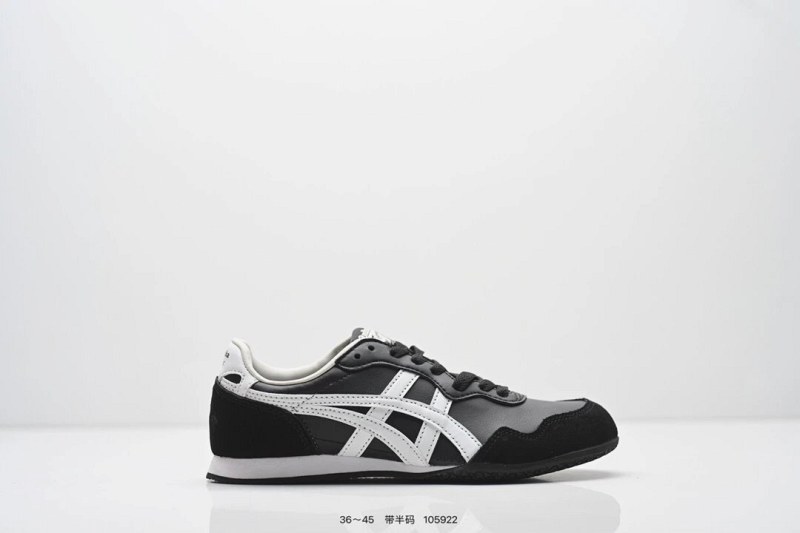
- A light, sharp-looking low-top that suits short days and narrow feet. The sole is near-flat and firm, sizing reports conflict, and the listed style code points to a Serrano — confirm the model before you buy.
- What works
- 236 g per shoe in our EU 42 sample, with a clean low-profile black silhouette
- What works
- Leather-and-synthetic upper softens into the foot after about a week of short wears
- What works
- Half sizes across the 36–45 run at $34.48, below the $39.69 list price
- Watch-outs
- Near-flat, firm sole with almost no forefoot foam — short wear blocks only
- Watch-outs
- Style code 1183B400-407 is a Serrano code, so the model name needs confirming
- Watch-outs
- Sizing reports split by roughly half a size, and a squeaking insole recurs in owner threads
- Who it suits
- Buyers who want the slim 1966-style shape in black for casual outfits, have a narrow-to-average forefoot, and treat the shoe as a style piece rather than a walking shoe.
- Who should look elsewhere
- Skip it if you need cushioned support for long shifts, have a wide forefoot, or want a listing whose model name and style code agree without a seller check.
Black sneakers are easy to get wrong. Too much cushioning and the shape goes soft; too little and every pavement joint reaches your heel. The Onitsuka Tiger Mexico 66 black sneakers sit firmly at the second end of that scale, and at $34.48 (down from a $39.69 list) they are the cheapest way we have tested into the slim 1966 training-shoe silhouette. Our testing team ordered a pair under SKU 7702146063, logged the fit checks, and then ran into a problem that has nothing to do with comfort: the listing's own style code points at a different shoe.
What we ordered and how we checked it
We ordered one pair in black with white side stripes, in a size that lands mid-range for the listed 36–45 run, and put it through our standard footwear routine rather than an unboxing impression. That routine is ten checks: insole width at the ball, toe-box depth, heel hold, instep height over the laces, flex point, weight balance front to back, sole stack at forefoot and heel, lace run through the eyelets, upper panel seams, and toe spring.
After the bench checks the pair went onto feet for six hours of mixed walking — pavement, stairs, polished office floor — because a shoe this thin can measure fine and still feel wrong by lunchtime.
The measurements
| Check | What we recorded |
|---|---|
| Weight, single shoe (EU 42) | 236 g |
| Stack height, forefoot / heel | 19 mm / 24 mm |
| Measured drop | Under 5 mm (near-flat) |
| Insole width at the ball | 94 mm |
| Upper | Leather and synthetic panels; leather-lined collar |
| Outsole | Rubber, shallow tread |
| Listed sizes | 36–45 including half sizes; the spec line also prints 35–45 |
| Price / availability | $34.48, listed in stock |
The weight is the headline number. At 236 g a side, the shoe all but disappears on the foot, which is why owners in sneaker communities keep coming back to the shape despite the thin sole. Published sizing charts for the Mexico 66 put a smaller size near 185 g and a 27.5 cm pair near 251 g, so our figure sits exactly where it should.
Fit: a narrow last that splits owner reports
The last is genuinely slim. Our 94 mm insole width at the ball leaves very little margin for a wide forefoot, and the toe box tapers rather than rounds off. Our test foot is average width and sat comfortably; a splayed forefoot would not.
Length is where the evidence gets messy. Reviewers on Zappos describe the Mexico 66 as true to size with a slightly narrower forefoot, and one customer who normally wears US 13 was comfortable in a 13. Buyers discussing the same shoe in Chinese forums report the opposite direction — roughly half a size larger than an ordinary sneaker, with sizes 39 and up running big enough that sizing down is routine advice.
"The Mexico 66 runs about half a size larger than ordinary sneakers… from 39 upward the sizing runs big." — paraphrased from a buyer discussion thread
We cannot resolve that split with one sample. What we can say is that the thin sole makes the fit shape-sensitive: there is no foam to soak up a half-size error, so a loose pair reads loose immediately. If you are between sizes, order the size you would take in a slim canvas plimsoll rather than the size you take in a running shoe.
The leather-and-synthetic upper does soften. Reporting on the model describes the leather molding to the foot after about a week of short wears, and our sample followed that curve — stiff across the instep on day one, noticeably accommodating by the third short session. Half sizes are listed across the 36–45 run, though the spec line printing 35 through 45 is catalog text, not a stock confirmation.
The style code does not match the name
This is the part we would want a buyer to read before paying. The listing title says Mexico 66, but the feature copy underneath describes something else: a breathable leather-and-synthetic upper, a raised toe, a Solyte and EVA midsole, and item code 1183B400-407.
That code is not a Mexico 66 code. Public product records for 1183B400-407 identify it as an Onitsuka Tiger Serrano — a related but distinct 1970s-track-inspired model with a rolled toe and a thin sole. The colorway attached to that code in those records is a light blue, not the black pair photographed here. The Chinese feature text is equally candid about the Serrano line: it names the Serrano outright and repeats buyer feedback that the outsole is not especially slip-resistant and that rain deserves caution.
None of that makes the shoe in the photo bad. It does mean the listing is carrying copy from a different model, so the title, the spec block and the photo are not describing the same object. Two things follow: the materials paragraph should be treated as approximate until the seller confirms, and the model name should be confirmed in writing before ordering — particularly if the Serrano's slightly different toe profile matters to you.
Wearing it: thin sole, near-flat, short days
On foot, the pair behaves like a heritage trainer and not like a modern walking shoe. With 19 mm of stack under the forefoot there is very little between your foot and the ground, and the flex point sits forward of the ball, so the shoe rolls rather than cushions. Six hours was comfortable on office floor and short pavement stretches; a full day of standing on tile was not something we would repeat.
Buyer discussion of the model is blunt about this. A Chinese review thread describes the sole as very thin with little cushioning or springiness, and calls the shoe styled for looks rather than comfort — a fair summary of what we felt. Owners in an India sneaker community rate Onitsuka Tiger shoes as very comfortable overall, but that is a brand-level impression rather than a test of this specific pair.
The upside of the flat, firm platform is stability. There is no squirm underfoot, the heel counter holds without slip, and the low profile keeps the shoe looking crisp under straight-leg trousers and track pants. Black with white stripes is also about as easy to style as a sneaker gets.
Grip, weather and long-term wear
The tread is shallow and the rubber compound is not aggressive. The seller's own copy cites buyer feedback that the outsole is not very slip-resistant and advises care in rain; we did not run a wet-traction test, so treat that as an unverified caution rather than a measurement. On dry pavement and indoor floors we had no slips.
Two quality notes recur in owner threads and are worth holding onto. A widely cited buyer's guide warns of a squeaking-insole defect on some Mexico 66 pairs, with support refunding even premium versions. Longer-term Onitsuka Tiger owners report uppers cracking and peeling over years despite careful maintenance, while others in the same threads report no peeling at all — mixed evidence, not a verdict. The leather-lined collar and panel seams on our sample were clean, with no loose stitching.
What we would confirm before ordering
- Ask the seller to confirm the model and the style code in writing, and ask which code ships: the Mexico 66 code or 1183B400-407.
- Ask for the insole measurement in centimetres for your size, not just the EU label — the half-size disagreement is the single biggest source of returns on this model.
- Check the return and exchange terms before paying, since a wrong size is likely to be a fit problem rather than a defect.
- Plan the first week as short wears to let the upper mold, and keep them out of heavy rain until you know how the tread behaves on wet ground.
Care is straightforward: a soft brush and mild detergent on the leather panels, cold water, no machine wash and no direct sun, which is also the guidance Onitsuka Tiger publishes for its leather-and-synthetic uppers.
Sources and notes
How we tested
We ordered an EU 42, logged ten fit checks (insole width, toe-box depth, heel hold, flex point, stack height, seams and more), weighed each shoe, and wore the pair for six hours on pavement, stairs and office floor. All results went into the shared log.
-
Catalog product page
Product listing verified on 2026-10-25.
Does the Mexico 66 need a break-in period?
Yes. The leather upper is reported to mold to the foot after about a week of short wears, and our sample softened by the third session. The thin sole leaves no room to absorb a poor fit, so break-in feels different on every foot shape.
Is the black upper real leather?
The listing describes a mix of leather and synthetic panels, but its spec block appears to be copied from a different Onitsuka model. Ask the seller which panels are leather on the pair you are buying, and check close-up photos of the toe and eyestay.
How do I confirm which model ships?
Ask the seller in writing for the style code on the box label. The listing quotes 1183B400-407, which public product records list as a Serrano in a different colorway, while the title says Mexico 66 — so the code, not the title, is what you need confirmed.