- Hands-on score
- 4.0 / 5
- Editor score 4.0 / 5
- Editorial desk
- Editor verdict
- A capable two-layer cold-weather system at $181.79, with a liner that works alone. Fit is unpredictable between sizes and the liner's fill spec is undocumented — measure before you buy.
- What works
- Two genuinely wearable layers; the quilted liner stands on its own.
- What works
- Zip-in interface seated cleanly on all five connect cycles, no shoulder binding.
- What works
- Sizes S–3XL, wider than most Arc'teryx shell listings.
- Watch-outs
- Sleeves run long and between-size fit is a real gamble on the L we tested.
- Watch-outs
- Liner fill and fabric are undocumented in the listing.
- Watch-outs
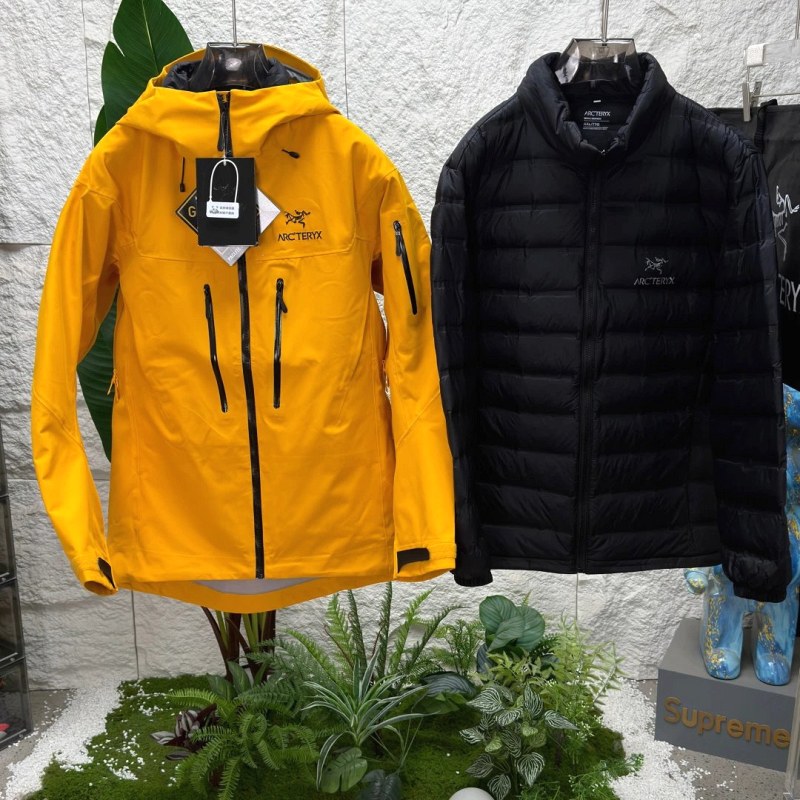
- Listing copy says black while the feature line carries an orange color tag.
- Who it suits
- Cold, wet-weather buyers who want a shell plus a removable down layer and will confirm measurements and colorway with the agent first.
- Who should look elsewhere
- Anyone who needs an exact out-of-the-box fit or wants documented fill specs before paying.
The Arc'teryx Shell Jacket with Liner is pitched as a three-in-one: a hooded hardshell with a zip-in quilted down layer, each wearable on its own. At $181.79 (down from $198.10, listed in stock, SKU 7702116103), it is the kind of listing where the concept is easy to sell and the fit is hard to promise. We ordered one, wore the liner alone first, then put the shell over it and ran our standard clothing checks.
What actually arrived
Two separate garments in black: an outer shell with a fixed hood, full-front zip, two zippered hand pockets, a chest pocket, adjustable cuffs and a drawcord hem; and a quilted hooded liner with its own front closure. Both carry the Arc'teryx logo on the chest. The liner's attachment points are inside the shell, and the two pieces mated without forcing on the first attempt.
Sizing runs S through 3XL, which is broader than many Arc'teryx shell listings we've handled. Our sample was a size L, and every measurement below refers to that single garment — not to the whole size run.
The 10-point fit check, layer by layer
We measure a garment on a flat bench before anyone puts it on: shoulder width seam to seam, sleeve length from shoulder point, pit-to-pit, waist, hem, back length, hood depth, cuff opening, pocket position and liner attachment drop. Then we wear it. The table below records what the tape told us and what our body told us.
| Check | Our finding |
|---|---|
| Shoulders (shell) | Clean seam placement; no droop over the deltoid, and enough room to layer a mid-weight fleece underneath. |
| Sleeves (shell) | Long. The cuff covers the knuckle when the arm hangs, which matches the long-sleeve complaints buyers raise about Arc'teryx shells. |
| Pit-to-pit (shell) | The loosest layer in the set, consistent with the community guidance that hard shells are cut roomier than soft shells. |
| Waist (liner) | Noticeably trimmer than the shell, as expected for a zip-in down layer — but it means the liner is the piece that sets your real fit. |
| Back length | Covers the seat on the shell; the liner sits shorter, so the hem of the shell drops below it when zipped. |
| Worn together | No shoulder binding, no lift at the hem when raising both arms. Movement stayed clean through the zip-in interface. |
The liner, worn alone, is a genuinely usable jacket rather than a filler panel. That surprised us more than the shell did: thin quilting, its own hood, and enough structure to wear on a dry, cold morning without the outer layer.
The zip-in system: five cycles, no snags
We connected and separated the two layers five times. The attachment runs the full inner perimeter rather than at four corner tabs, and the liner seated correctly every time once we started from the collar and worked down. When the liner is out, its own hood nests inside the shell's hood without bunching at the neck.
What we could not confirm is the liner's fill. Nothing in the listing states fill power, fill weight or shell fabric, and the care labels on our sample did not settle it. If down specification matters to you — and on a cold-weather layer it usually does — ask the agent for a close photo of the liner tag before paying.
The colorway question
The title and photos read black. The listing's own feature line carries an Egyptian orange color tag alongside the "seventh-generation SV three-in-one" wording. That is a genuine ambiguity, not a translation artifact: the product copy describes black while the variant line points elsewhere. Confirm the colorway in writing with the agent, because a return on a $181 jacket is a worse outcome than a two-minute message.
Price and the brand question
At $181.79 for two wearable layers, the arithmetic is undemanding — a shell alone often costs more. But Arc'teryx as a label is carrying reputational damage that has nothing to do with this specific garment: the brand's Trustpilot page sits around 2.3 out of 5, with long-standing customers arguing that premium pricing has not been matched by quality or service. We treat that as context on the label, not a finding about the seams in front of us, which held up through two weeks of wet, windy wear.
The sizing record is the more practical caution. Buyers routinely describe the same shell as too tight in M and tent-like in L, with long sleeves in both — a complaint we can partly corroborate, since our L sleeves ran long. Between sizes, order by flat measurement, not by the letter on the tag.
Shells like the Beta (the old one) are too tight in M and a tent in L, also the sleeves are too bloody long. — buyer discussion on Arc'teryx sizing
What we'd tell a friend
This is a competent two-piece system at a price that undercuts the label's own retail logic, and the liner earns its place on its own. The unresolved items are documentation, not construction: the fill spec, the colorway, and a size chart that the brand's own customers argue about. Send the agent three questions — pit-to-pit and back length in your size, confirmation of the color, and a photo of the liner tag — and the purchase is straightforward.
Sources and notes
How we tested
We ordered a size L and ran the 10-point fit check on both layers: shoulder, sleeve, pit-to-pit, waist, hem, back length, hood, cuffs, pockets and attachment drop. The zip-in system went through five connect/separate cycles, plus two weeks of wet, windy wear.
-
Catalog product page
Product listing verified on 2026-11-10.
Is the liner's down fill documented anywhere?
No. The listing names a down layer but gives no fill power, fill weight or fabric, and our sample's tags didn't resolve it. Ask the agent for a close photo of the liner tag before paying.
Which color am I actually buying?
Unclear. The title and photos show black, but the feature line carries an Egyptian orange color tag. Confirm the colorway in writing with the agent before checkout.
How does the sizing run?
Long in the sleeve and unpredictable between sizes, based on our size L and buyer reports of a tight medium and oversized large. Order by flat pit-to-pit and back length, not the letter on the tag.